Will a second opinion delay cancer treatment? Questions for both teams
Ask the treating clinician about urgency and the reviewing team about its actual scope and timing. Agree what happens if records or the answer arrive late, without cancelling care on your own.
The answer depends on two things: the urgency of your clinical decision and how long the proposed review will actually take. An available appointment does not establish that waiting is safe. Ask your treating clinician about timing before changing booked care.
This article concerns cancer care. It offers questions for coordinating another opinion; it cannot assess your cancer, choose a treatment or give a safe number of days to wait. If you need urgent care, seek it rather than waiting for another review.
Start with the decision and its timing
The American Cancer Society explains that some cancer decisions need to be made immediately and advises discussing concerns about waiting with your doctor. A general account of how long someone else waited cannot establish what is appropriate in your circumstances.
Ask your treating clinician:
- Which decision needs to be made now, and which questions could another opinion help resolve?
- What timing do you recommend, and what would be the risk of delaying this decision or treatment?
- Which tests and appointments should remain booked while I arrange the review?
- Who should I contact if there is a change in my condition or the review is taking longer than expected?
Write down the clinician's answer, who gave it and when. If no timing has been agreed, label it not yet confirmed. Do not create a deadline by counting from a forum post or a service's advertised turnaround.
Coordinate both teams around that answer
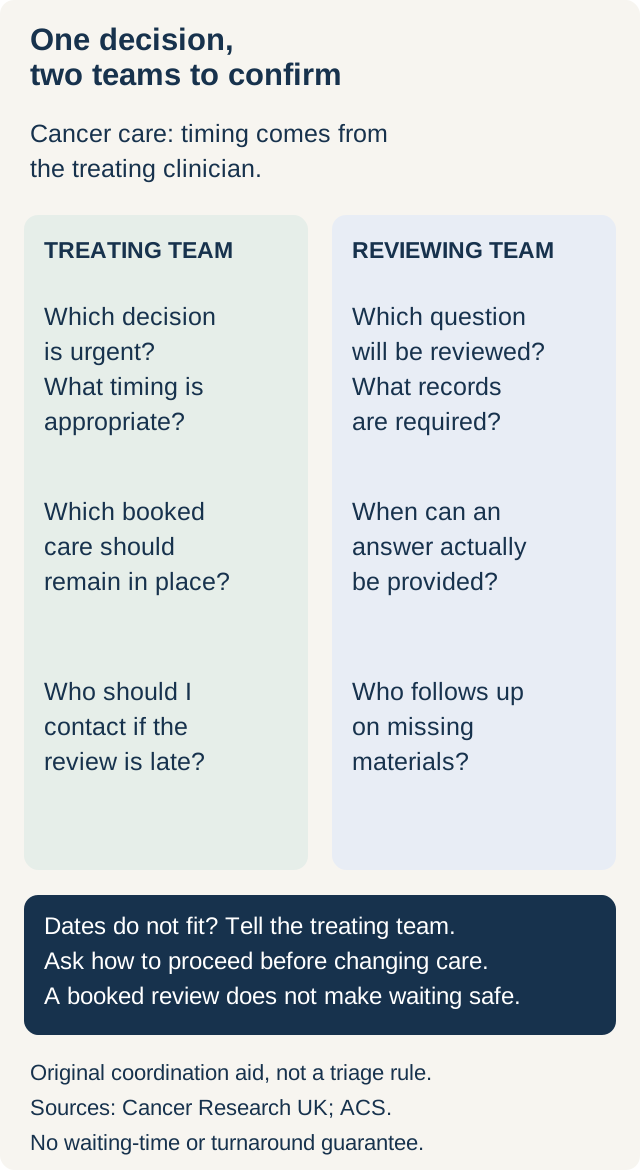
Figure: one clinical decision, two sets of confirmations. This original coordination map draws on American Cancer Society and Cancer Research UK guidance. It contains no waiting-time threshold or triage rule. Clinical urgency comes from the treating clinician; the diagram cannot establish it.
Ask the reviewing service which question it has agreed to answer, what records it needs and when it expects to provide that answer. Clarify whether a date refers to an appointment, receipt of complete records or availability of the written opinion. Record any missing material and who will follow up on it.
If the review may not finish within the timing discussed with your treating clinician, tell that clinician promptly and ask how to proceed. A booking confirmation or a payment receipt does not resolve this clinical question.
Agree what happens if something is late
Use a short note with four headings: decision to be discussed, timing advised by treating clinician, reviewer's expected answer date, and contact if those dates do not fit. Add the person responsible for supplying missing records. This is an editorial note format, not a clinical assessment tool.
Cancer Research UK advises discussing the likely delay and whether it could be harmful. It also suggests keeping existing tests or treatments booked where possible, to avoid delays if care continues with the first doctor. Its page describes UK services; it does not establish appointment rights or waiting times elsewhere.
Another opinion does not automatically transfer care
Ask who will explain the new opinion, send it to the treating team and discuss the next decision with you. Cancer Research UK notes that a second opinion does not itself mean the second doctor takes over treatment. Do not assume responsibility has transferred because the report has arrived.
For collecting materials, use the second-opinion preparation sheet. If the question includes another examination of pathology material, confirm that review's scope with the receiving team.
Sources checked on 30 October 2026. Cancer Research UK lists a review date of 21 September 2026; the American Cancer Society page lists revision on 31 July 2025. No patient story, individual urgency assessment or guaranteed review time is used here.
Sources
Take these questions to your clinician. The options guide can help you organise a discussion about benefits, uncertainties and alternatives.